On 10 January 1984, an elderly actress named Clara Peller peered at a tiny burger patty under a giant bun and asked, "Where's the beef?" [1][2]. The Wendy's ad became a national catchphrase. Two months later, presidential candidate Walter Mondale used it in a televised debate to mock his rival's ideas as all bun and no substance [2].
Forty years on, the question has flipped. Shoppers now look at a plant-based burger and ask: where's the protein, what's in it, and is it worth the price? The answer has sent plant protein on one of the wildest rides in the food business, and Canada's prairie farms sit at the bottom of the track.
1941: Henry Ford takes an axe to a car
Plant protein's big ambitions are older than fake meat. On 13 August 1941, Henry Ford unveiled a car whose body panels were made of plastic said to contain soybean fibre [3]. A famous photo shows Ford swinging an axe at a panel of the material to prove its toughness; the axe bounced off (it had a rubber boot on the blade) [3]. World War II halted car production, and the plastic car was forgotten [3].
Ford's idea, using farm crops for things far beyond animal feed, came back decades later in the food aisle.
2019: the hottest stock on Wall Street
Canada got an early taste. On 9 July 2018, A&W Canada, the country's second-largest burger chain with more than 925 restaurants, put the Beyond Meat Burger on its menu nationwide, made with protein from peas and mung beans [4][5]. Demand was so strong that it sold out within weeks [5].
The following May, Beyond Meat went public. Its shares jumped 163% on the first day, the best US stock-market debut since the 2008 financial crisis, leaving the company worth US$3.83 billion [6]. By the summer of 2019, the stock had risen more than 500%, and Beyond Meat was briefly worth more than a quarter of the companies in the S&P 500 [7].
Plant-based meat seemed to be the future of protein.
2026: the hype cools
Then came the slump. In the US, retail sales of plant-based meat and seafood fell 10% in 2025 to about US$1 billion, and the number of packages sold fell 11% [8]. Global funding for alternative proteins dropped 20% to US$881 million, the first time it fell below US$1 billion since 2018 [9].
Beyond Meat felt it most. Its second-quarter 2026 revenue fell 8% to US$68.8 million, and US retail sales dropped almost 10% [10]. The company now calls itself "Beyond The Plant Protein Company" and is moving into products such as a canned pea-protein drink [10].
Why the fall? Shoppers found many products expensive and heavily processed, and the novelty wore off. Meat industry campaigns also questioned the ingredients [10].
But protein itself is booming
Here's the twist: the world is hungrier for protein than ever. High-protein foods, drinks and supplements sold more than US$3 trillion worldwide in 2025, and global protein demand is forecast to grow 11% between 2024 and 2029 [11]. Weight-loss drugs such as GLP-1 medicines are part of the reason: their users need more protein in smaller meals [11].
Plant protein is following that money. While plant-based burgers struggled in the US, plant-based ready-to-drink beverages grew 12% in 2025 [8]. Globally, plant-based meat sales still rose 8% to US$6.6 billion, led by Europe [9]. The trend is not "plant protein is over". It is "fake meat is one product, and protein is the market".
Canada's pea power
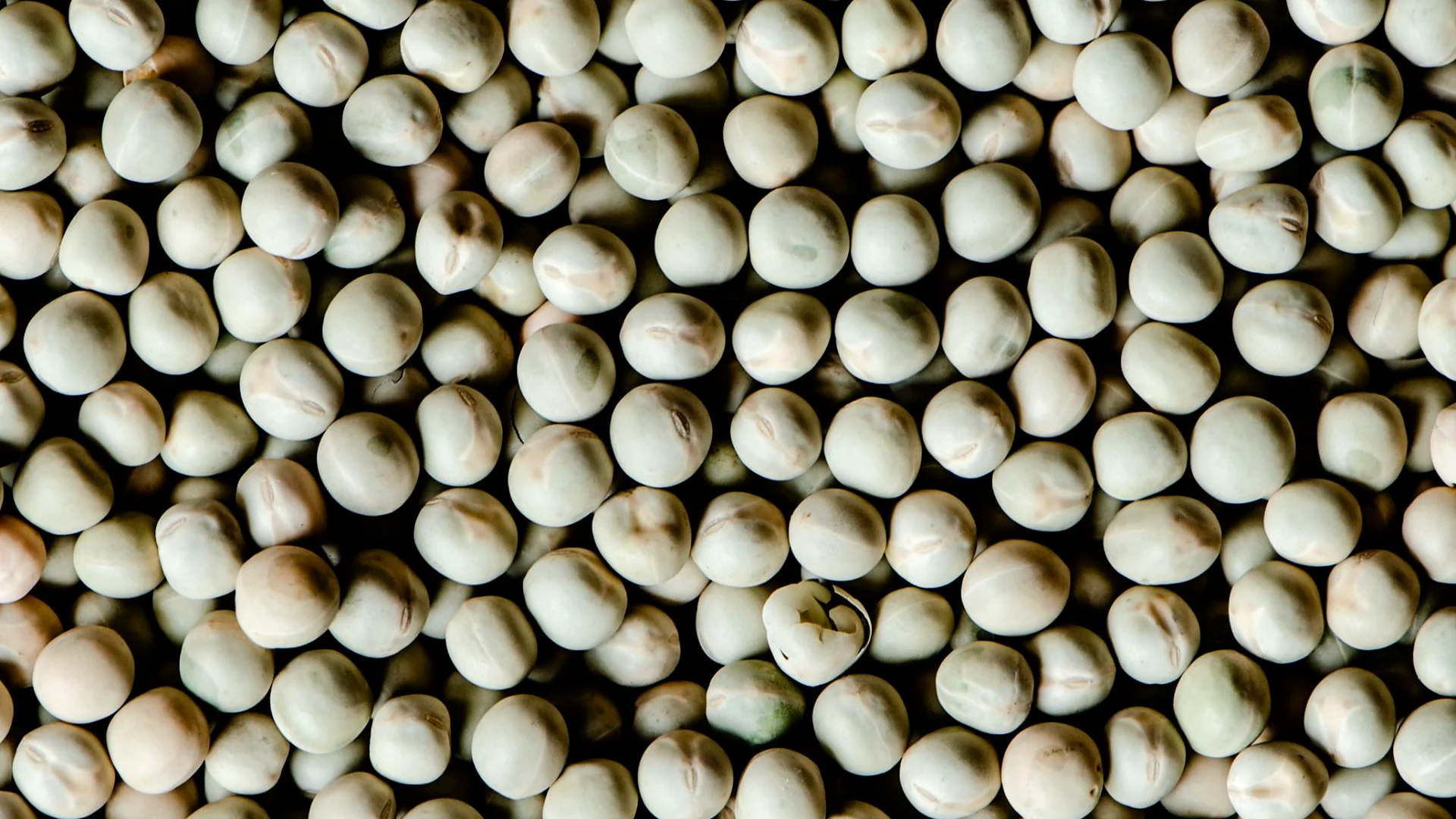
This is where Canada comes in. Canada is the world's largest producer and exporter of dry peas, grown mostly in Alberta and Saskatchewan [12]. It is also a major grower of canola, another protein source.
- The world's largest pea protein plant is in Portage la Prairie, Manitoba. Roquette's plant, operating since late 2020, can process 125,000 tons of yellow peas a year [12][13].
- Protein Industries Canada, a federally backed innovation cluster founded in 2018, has C$353 million in funding through 2028 to help companies turn crops into food ingredients [14].
- The bumps are real too. Winnipeg's Merit Functional Foods, which made pea and canola protein, went into receivership in 2023 after costs and interest rates rose [15].
The opportunity is to sell more than raw peas. Canada ships much of its pea crop overseas in bulk. Turning peas and canola into protein ingredients at home keeps more of the value in Canada and gives food makers worldwide a traceable supply.
What it means for buyers
- Follow protein, not just plant-based. Drinks, snacks, bars and baked goods with added protein are growing faster than meat substitutes [8][11].
- Ingredients are the opportunity. Canadian pea and canola proteins are sold to food and beverage makers worldwide [12][13].
- Price and taste win. The plant-based meat slump shows that shoppers buy products that taste good and cost about the same as what they replace [10].
- Watch Europe. Plant-based demand there is holding up better than in the US [9][10].
Where's the protein?
Clara Peller's question made Wendy's famous. Today's shoppers ask a different one, and they mean it: how much protein is in this, and where did it come from? For Canadian farmers and food makers, a good answer to that question could be worth more than any burger.
Nature Shire helps Canadian food and beverage brands, plant protein makers included, reach buyers worldwide. Follow us on X at @NatureShire for more stories from the food system.
References
Paste under a "References" heading at the end of the article.
- Westport Tech Museum, "Today in television history: January 10th, 1984, Clara Peller appears in Wendy's iconic 'Where's the Beef?' commercial." https://www.westporttechmuseum.com/blogs/techtastic/today-in-television-history-january-10th-1984-clara-peller-appears-in-wendys-iconic-wheres-the-beef-commercial
- Wikipedia, "Where's the beef?" https://en.wikipedia.org/wiki/Where%27s_the_beef%3F
- Wikipedia, "Soybean car." https://en.wikipedia.org/wiki/Soybean_car
- Beyond Meat, "A&W brings Beyond Meat's plant-based burger to Canada" (June 2018). https://www.beyondmeat.com/en-US/press/a-and-w-brings-beyond-meat-s-revolutionary-plant-based-burger-to-canada
- A&W Revenue Royalties Income Fund, "A&W Beyond Meat Burger temporarily out of stock" (August 2018). https://awincomefund.mediaroom.com/a-w-beyond-meat-burger-temporarily-out-of-stock
- BNN Bloomberg, "Beyond Meat soars 163% in best IPO since financial crisis" (2 May 2019). https://www.bnnbloomberg.ca/beyond-meat-soars-163-in-best-ipo-since-financial-crisis-1.1252414
- CNBC, "How Beyond Meat's stock surged 500 percent" (14 September 2019). https://www.cnbc.com/2019/09/14/beyond-meat-stock-how-the-alternative-meat-company-surged-500-percent.html
- AgFunderNews, "US alt-meat slump continues, but plant protein gains traction in beverages – GFI" (April 2026). https://agfundernews.com/us-alt-meat-slump-continues-but-plant-protein-gains-traction-in-beverages-gfi
- Green Queen, "Global sales of plant-based food grew by 3% in 2025 amid funding decline: GFI report" (April 2026). https://www.greenqueen.com.hk/gfi-state-of-the-industry-report-2025-2026-plant-based-sales/
- Green Queen, "Beyond Meat bets on international markets as US sales plunge further in Q2 2026" (August 2026). https://www.greenqueen.com.hk/?p=87198
- Euromonitor International, "Wellness trends and GLP-1s fuel USD3 trillion protein market" (14 July 2026). https://www.euromonitor.com/newsroom/press-releases/july-2026/wellness-trends-and-glp-1s-fuel-protein-market
- Manitoba Agriculture, "Dry pea profile 2026." https://www.gov.mb.ca/agriculture/markets-and-statistics/crop-statistics/pubs/dry-pea-profile-2026.pdf
- Food Manufacturing, "Roquette opens world's largest pea protein plant in Canada." https://www.foodmanufacturing.com/capital-investment/news/21903850/roquette-opens-worlds-largest-pea-protein-plant-in-canada
- vegconomist, "Protein Industries Canada receives $150M renewal funding" (14 February 2023). https://vegconomist.com/investments-finance/protein-canada-150m-funding/
- Nosh, "Plant protein maker Merit Functional Foods announces receivership" (2023). https://www.nosh.com/news/2023/plant-protein-maker-merit-functional-foods-announces-receivership/