
For a few years in the 2000s, Jamie Lee Curtis was the face of Activia, the yogurt that promised to help "regulate your digestive system." In 2010, Dannon agreed to pay US$21 million to settle state investigations, and the US Federal Trade Commission found the claim that Activia was "clinically proven" to do that was false [5][6].
It was not the first time yogurt had been sold as a miracle. The gut-health aisle you see today, with its kefir, kombucha and "live cultures," started more than a century ago with a lecture in Paris, a Bulgarian microbe and a scientist who believed sour milk could help people live longer.
1904: the lecture that started a craze
On 8 June 1904, Élie Metchnikoff of the Pasteur Institute gave a public lecture in Paris called "Old Age" [1]. His idea was bold. He argued that harmful bacteria in the gut produced toxins that sped up ageing, and that the lactic acid made by friendly microbes in sour milk could keep them in check [1].
His example was Bulgaria. Metchnikoff pointed to the long lives of villagers in parts of that country, who ate a lot of sour milk, and to the "Bulgarian bacillus" that fermented it [1]. In 1905, a young Bulgarian scientist, Stamen Grigorov, identified the bacterium behind Bulgarian sour milk in a laboratory in Geneva [2]. It is known today as Lactobacillus bulgaricus.
Then Metchnikoff won the 1908 Nobel Prize in Physiology or Medicine, for earlier work on the immune system [1]. A Nobel winner endorsing yogurt was the 1900s equivalent of a celebrity influencer.
Yogurt goes to the pharmacy
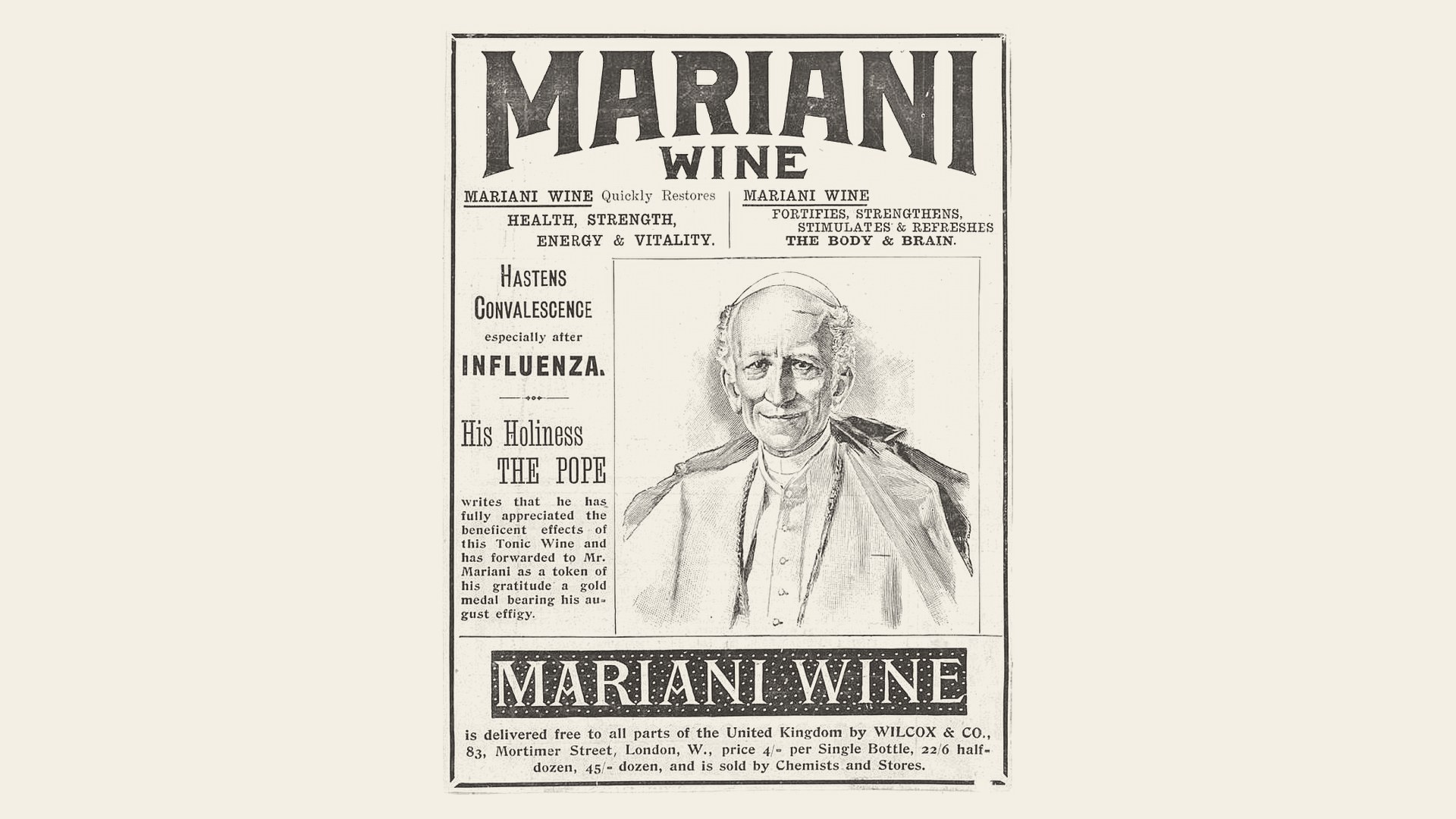
The newspapers dropped his caveats. By 1905, Parisians were queuing at a sour-milk shop near the Théâtre du Vaudeville, doctors in Europe and America were prescribing it, and pharmacies sold dried cultures as tablets and powders, along with home incubators [1]. The craze even made it into a 1910 London pantomime [1].
In Barcelona, a businessman from Salonica named Isaac Carasso noticed how many children suffered from digestive problems. Drawing on Metchnikoff's work, he sourced yogurt cultures and in 1919 started a small company named after his son Daniel, nicknamed "Danone" [3]. Because yogurt was barely known in Western Europe, he first sold it through pharmacies, as a medicine [3]. Daniel later took the business to France and the United States, where it became Dannon [3].
So the line runs from a Bulgarian village, to a Geneva lab, to a Paris lecture hall, to a Barcelona pharmacy, to a New York brand, and finally to a Hollywood star in a TV advert.
What the science says now
Metchnikoff died in 1916, and the idea that gut microbes affect ageing fell out of fashion for nearly a century [1]. Today, research on the gut microbiome is booming, and studies in worms and flies show gut bacteria can affect lifespan. Whether the same holds for humans is still unknown [1]. He may have been early rather than wrong.
Meanwhile, the simplest gut-health advice is the least glamorous: eat more fibre. Canadian adults are advised to get about 25 grams a day for women and 38 for men, but the average intake is only about 14–17 grams [7].
What you can and can't say on the label
The Activia case is why claims matter. In Canada, a food can say it contains a "probiotic that naturally forms part of the gut flora" or one "that contributes to healthy gut flora" only if it meets set conditions [4]. It must use one of the listed species, such as certain Bifidobacterium and Lactobacillus strains, and contain at least 1 billion live bacteria (CFU) per serving through its shelf life [4]. The label must name the strain and the count [4]. As of today, Health Canada has not accepted any strain-specific health claims [4].
For exporters, that is a useful discipline. A claim that passes in Canada is usually a safer starting point for other markets than a bold one that worked in an advert.
What it means for buyers
- Check the count and the strain. A credible probiotic product names its strain and guarantees the CFU count until its best-before date [4].
- Watch the claims. "Supports healthy gut flora" is permitted when the conditions are met. "Cures bloating" or "boosts immunity" invites regulators [4][5].
- Think beyond yogurt. Kefir, fermented vegetables, high-fibre snacks and prebiotic drinks are all part of the same shelf now.
- Sell the fibre story. With most adults eating about half the fibre they need, high-fibre products have a simple, honest message [7].
The prophet was early
Metchnikoff died at 71 [1], and Activia never proved it could regulate anyone on a schedule. But between them they built one of the biggest ideas in modern food: that what feeds the microbes in your gut feeds you too.
Nature Shire helps Canadian food and beverage brands, including dairy and fermented-food producers, reach buyers worldwide. Follow us on X at @NatureShire for more stories from the food system.
References
- Smithsonian Magazine, A science lecture accidentally sparked a global craze for yogurt.
- Wikipedia, Stamen Grigorov.
- Wikipedia, Isaac Carasso.
- Health Canada, Accepted claims about the nature of probiotic microorganisms in food.
- US Federal Trade Commission, Dannon agrees to drop exaggerated health claims for Activia yogurt and DanActive dairy drink (15 December 2010).
- CBS News, Why Dannon let Jamie Lee Curtis tell lies about Activia.
- UBC Food, Nutrition and Health, The fibre gap: why most aren't getting enough and what to do about it.