In the 1920s, a London boy named Christopher Robin Milne fell for a black bear at the London Zoo. His father, A. A. Milne, wrote a book about a honey-obsessed bear, and Winnie-the-Pooh was born [3]. The real bear was Canadian. A Canadian Army veterinarian, Harry Colebourn, bought her as an orphaned cub in White River, Ontario, in August 1914 for $20. He named her Winnipeg after his hometown, and she went to the zoo when his regiment left for France [3].
So the world's most famous honey lover was, technically, a Canadian export. That is a fitting place to start the story of humanity's oldest sweetener, which has also been a weapon in a war, a target for fraud and, today, a test of how much shoppers are willing to pay for the real thing.
8,000 years ago: the first honey hunter
In the Cuevas de la Araña near Bicorp, in eastern Spain, a rock painting shows a person gathering honey from a wild hive, surrounded by bees [1]. It is about 8,000 years old and is thought to be the earliest known picture of bees [1]. The caves are now part of a UNESCO World Heritage Site [1].
For most of human history, honey was the sweet. The Bible's promised land was "a land flowing with milk and honey" (Exodus 3:8), not a land flowing with sugar.
1811: Napoleon's war on cane sugar
That changed when cane sugar from slave plantations in the Caribbean flooded Europe. Then war got in the way. Britain's naval blockade, and Napoleon's own Continental Blockade against British goods, cut France off from colonial sugar. A loaf of sugar that cost about 3 francs before the French Revolution cost more than 30 francs by 1804 [4].
Napoleon's answer was a root vegetable. German chemist Andreas Marggraf had shown in 1747 that beets contain sugar, and his student Franz Achard built a process to extract it [4]. On 29 March 1811, Napoleon ordered about 4,000 hectares of sugar beet to be planted in France, with a 1 million franc fund to reward anyone who could make good beet sugar [4].
In January 1812, banker Benjamin Delessert produced loaves of white beet sugar that tasted like cane. Napoleon visited his factory and pinned his own cross on Delessert's chest [4]. Two centuries later, sugar beet is a huge crop, and beet syrup has become one of the cheap sugars used to fake honey [2]. History has a sense of humour.
The fake honey scandal
Honey is expensive to produce and cheap sugar syrup is not, so honey is one of the most faked foods in the world. The European Commission's "From the Hives" action tested 320 batches of honey imported into the EU between November 2021 and February 2022. It flagged 147 of them, 46%, as suspected of being bulked out with sugar syrups [2].
The fraudsters are getting smarter. Testers found that maize and cane syrups were being replaced by syrups made from rice, wheat or sugar beet, which are harder to detect [2]. China had the most suspicious shipments, at 74%. Every batch shipped from the UK was suspicious, which the Commission says probably reflects foreign honey blended there before being sent on [2].
Canada checks too. In 2019–2020, the Canadian Food Inspection Agency tested 275 honey samples. Of the 20 that failed, 19 were imported, and the agency kept an estimated 83,461 kg of adulterated honey off the market [5]. In retail shops, 98% of the samples passed [5].
In Bee Movie (2007), Barry B. Benson, voiced by Jerry Seinfeld, sues humanity for stealing honey from bees [6]. The real lawsuit, if bees could file one, would be for passing off sugar syrup as their work.
Canada's honey moment
Canadian beekeepers had a strong 2025. They produced 84.1 million pounds of honey, up 13.2% on 2024, worth $241.3 million, from a record 854,653 colonies [7]. Four-fifths of it came from the Prairie provinces [7].
But keeping bees alive is getting harder. Canadian beekeepers lost 36.5% of their colonies over the 2024–25 winter, according to the Canadian Association of Professional Apiculturists (excluding British Columbia, where data were incomplete) [8]. Each lost colony has to be rebuilt, which raises the cost of every jar.
Raw, real and traceable
This is where raw honey comes in. Raw honey is honey that has been only lightly strained, not heated or finely filtered, so it keeps the character of the flowers it came from. It is also harder to fake convincingly, and buyers who can trace a jar back to a named region or beekeeper are paying a premium for that certainty.
What it means for buyers
- Test, don't trust. Ask suppliers for laboratory results from authenticity tests (isotope and NMR testing are the methods regulators use) [5].
- Prefer traceable origins. Honey with a named country, region or apiary is easier to verify than an anonymous blend from several countries.
- Beware the bargain. If a bulk honey price is far below the cost of production, sugar syrup is the likeliest reason.
- Sell the story. Raw, single-origin and Canadian honey can command higher prices when the label and the paperwork back it up.
Bees did the work first
From a Spanish cave wall to Napoleon's beet fields and a bear from White River, honey has always been worth fighting for. The fight today is for authenticity, and the winners will be the producers who can prove that bees, not syrup tanks, did the work.
Nature Shire helps Canadian food and beverage brands, honey producers included, reach buyers worldwide. Follow us on X at @NatureShire for more stories from the food system.
References
- Wikipedia, Cuevas de la Araña; UNESCO World Heritage Site "Rock Art of the Mediterranean Basin on the Iberian Peninsula" (no. 874).
- European Commission, EU coordinated action "From the Hives" (honey 2021–2022) (results published March 2023).
- The Canadian Encyclopedia, Winnie-the-Pooh.
- Fondation Napoléon, La bataille du sucre (in French).
- Canadian Food Inspection Agency, Honey authenticity surveillance results (2019 to 2020).
- Wikipedia, Bee Movie.
- Statistics Canada, More honey for more money in 2025 (19 May 2026).
- Canadian Association of Professional Apiculturists, Preliminary report on winter losses 2025.
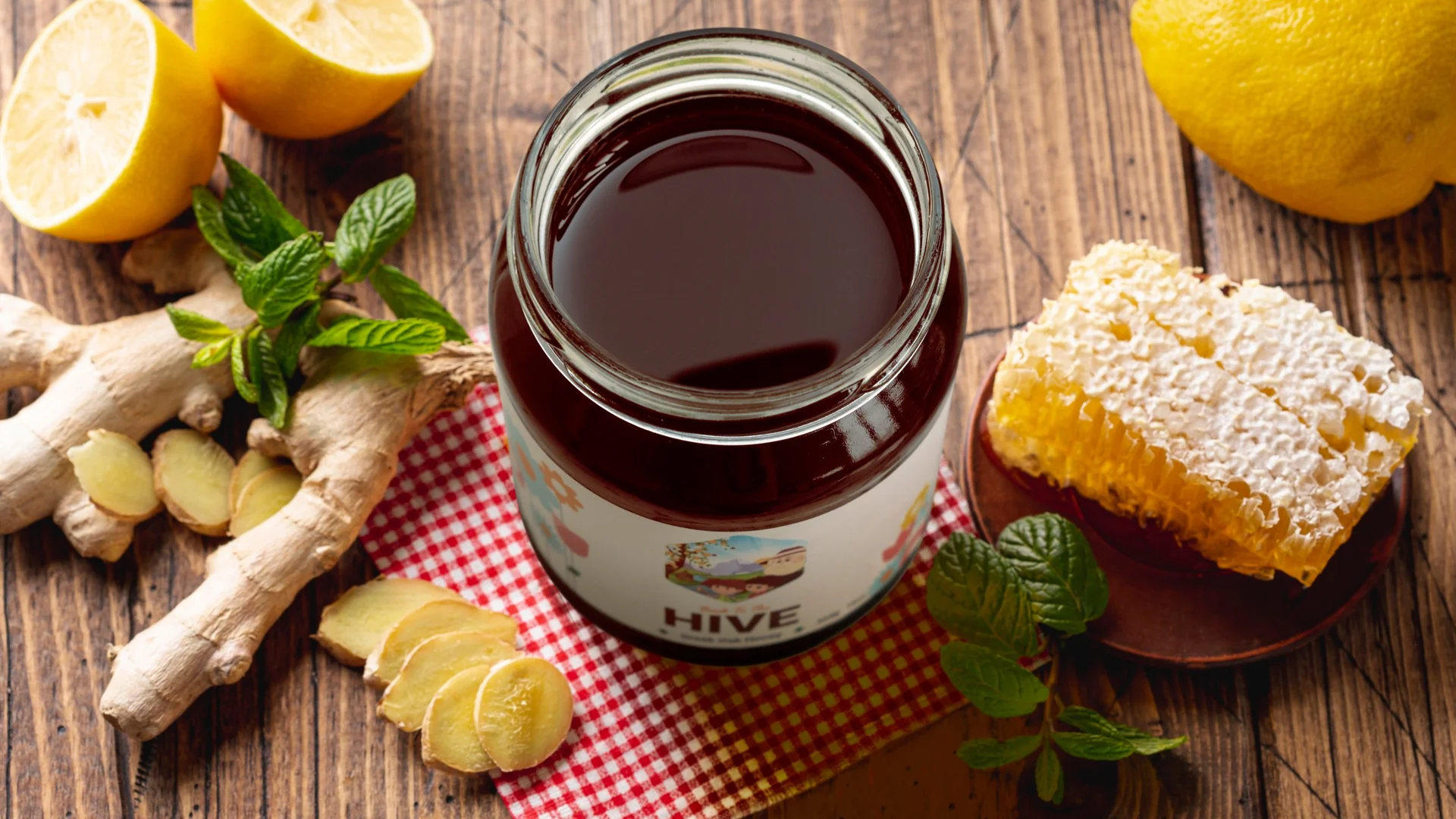
Banner image: Raw oak honey from Back to the Hive.